
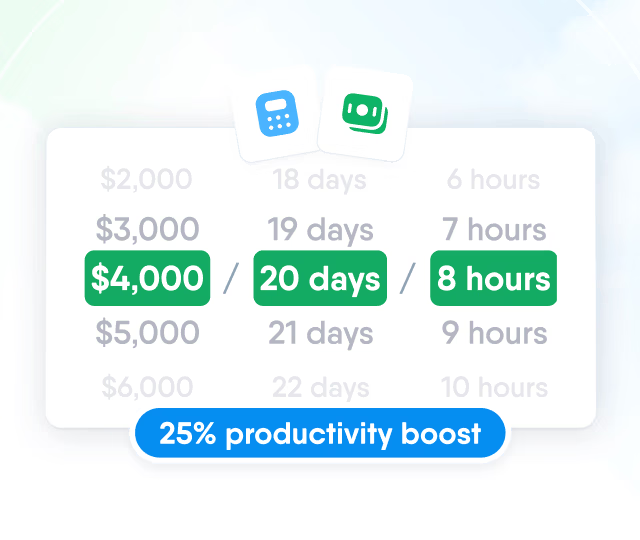
HR efficiency estimator
How does the HR efficiency estimator from PeopleForce work.
Calculate your impact



Payroll budget
What a payroll budget is, which costs go into it, how HR and finance build it and how to track actual spend against the plan
What is a payroll budget?
A payroll budget is the amount a company plans to spend on paying its people over a period, usually a financial year broken down by month. It covers base salaries, variable pay, planned pay rises and new hires, and the employer's own costs on top of gross pay, such as social contributions and pension payments.
In most companies it is the largest line of operating costs, so HR and finance build it together: HR brings headcount plans and pay decisions, and finance sets the limit the business can afford. A payroll budget is narrower than total rewards: it counts only the money that goes through payroll, not benefits in kind, training or perks.
What a payroll budget includes
| Component | What goes in | How it is budgeted |
|---|---|---|
| Base pay | Salaries and hourly wages of current employees | From each person's base salary and FTE |
| Variable pay | Commission, incentive payments and bonuses | At the expected payout, in the month it is paid |
| Pay rises | Annual review, promotions, merit increases | From the month they take effect, not for the full year |
| Headcount changes | New hires, replacements and leavers | From the start month; a mid-month start is paid as a prorated salary |
| Overtime and allowances | Overtime, shift and night premiums, on-call pay | From last year's pattern, adjusted for planned workload |
| Employer costs | Social contributions, pension contributions, payroll taxes | As a percentage on top of gross pay set by law |
How to build a payroll budget
- Take current payroll as the baseline: every employee with base pay, FTE and department or cost center.
- Add the workforce plan: approved new positions with a start month and expected pay, plus expected leavers and replacements.
- Price the pay changes: the annual review budget, promotions and adjustments to salary bands.
- Add variable pay at the expected payout and seasonal costs such as overtime.
- Apply employer costs to the total.
- Split the result by month and by cost center, then compare actual payroll with the plan every month and explain each variance.
An example. A company has 100 employees with an average gross salary of £3,000 a month, so base pay comes to £3,600,000 a year. A 4% pay rise from April adds £108,000 for the nine remaining months. Ten hires on the same pay starting in July add £180,000 for six months. The gross payroll budget for the calendar year is £3,888,000, before variable pay and employer costs.
Payroll budgets in the UK
In the UK, two items make up most of the employer's cost above gross pay. Employer National Insurance is charged at 15% on earnings above the secondary threshold of £5,000 a year per employee, and under automatic enrolment the employer pays at least 3% of qualifying earnings into a workplace pension. The National Minimum Wage and National Living Wage rates change every April, and a rise at the bottom of the pay scale usually moves the bands above it, so the budget has to allow for both. Check the current rates on GOV.UK before fixing the numbers.
Payroll budgets and PeopleForce
In PeopleForce Payroll, every payroll run lists base compensation, additional compensation, adjustments and total gross for each person, with a total row on every tab, so the actual figure for the period is ready to set against the budget. The ‘Vs Prior’ column compares each person's total with the previous run of the same cycle and shows unexpected jumps before the run is approved. Cost centers record which unit each person's pay belongs to, in full or split by percentage. On the planning side, positions in Workforce Planning hold an expected base compensation, FTE and planned start date, and the list of positions exports to Excel.
Frequently asked questions
What is the difference between a payroll budget and total labour cost?
A payroll budget covers pay and the employer costs tied to it. Total labour cost is wider: it adds benefits, training, recruitment, equipment and other spending on people that does not go through payroll.
How often should a payroll budget be reviewed?
Compare it with actual payroll every month and re-forecast at least once a quarter, or sooner when hiring plans, pay decisions or statutory rates change.


Let us show you what's possible
From Core HR to advanced workforce analytics — see the platform saving 80 hours a month for teams just like yours. Fully tailored to your workflow.