
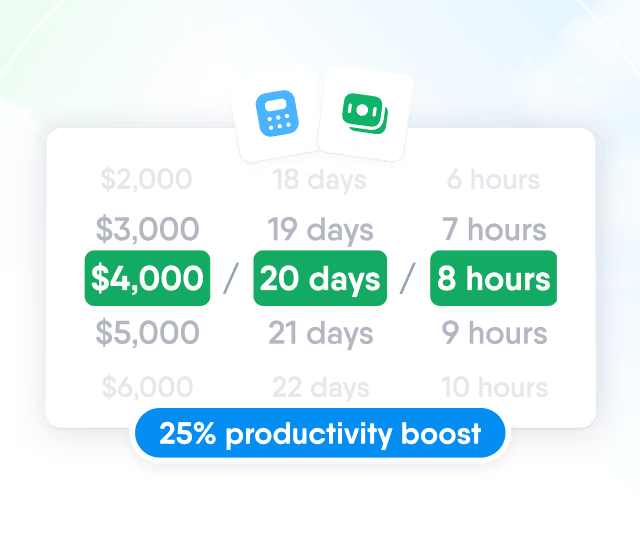
HR efficiency estimator
How does the HR efficiency estimator from PeopleForce work.
Calculate your impact



Employee resignation: notice periods, letter templates and HR steps in Ukraine and the UK

A resignation ends the employment relationship at the employee's initiative. The employee gives notice, works it or agrees an earlier exit, and the employer settles final pay and issues the leaving documents. The rules differ sharply by country: in Ukraine the notice is two weeks and the resignation must be written (Article 38 of the Labour Code), while in the UK the statutory minimum is one week and the contract usually sets a longer period.
This guide covers both jurisdictions side by side: notice periods, letter templates, the HR process, final pay and the most common mistakes.
Key facts
Ukraine: two weeks' written notice for a permanent contract. Final pay and leaving documents are due on the last working day.
UK: at least one week's notice after one month of service, or the longer period in the contract. Final pay usually goes out on the normal payday.
Unused holiday is paid out on leaving in both countries.
Withdrawing a resignation: in Ukraine, possible until notice expires; in the UK, only with the employer's agreement.
Illness or holiday during notice does not move the leaving date in either country.
Resignation in Ukraine: Article 38 of the Labour Code
An employee may terminate an open-ended contract by giving the employer two weeks' written notice. The period runs from the day after the resignation is submitted, and its last day becomes the leaving date in the termination order. On that day the employer must issue a copy of the order, pay all amounts due and return the paper employment record book if the company holds it (Articles 47 and 116).
Example. A resignation is submitted on the 3rd. The two weeks expire on the 17th, which is the last working day and the leaving date. If the employee names a later date, that date applies: the employer cannot shorten the notice without consent or require the employee to work longer.
Article 38 contains three separate rules. Part one sets the two-week notice and lists situations where the employer must release the employee on the date requested: relocation, a spouse's transfer to another area, starting education, pregnancy, caring for a child under fourteen or a child with a disability, caring for a sick family member, retirement and other valid reasons. Part two protects an employee who changes their mind: if they stay on after notice expires and do not insist on leaving, they cannot be dismissed on the old resignation. Part three lets the employee leave on their chosen date if the employer breaches labour law or the contract, with severance of at least three months' average pay (Article 44).
Under martial law, an employee may also resign on the date stated in their application if hostilities in the area of the workplace threaten their life and health (Article 4 of Law No. 2136-IX). This does not apply to compulsory community work or critical infrastructure.
Ukrainian resignation letter template
To the Director of _____________ LLC
_____________________ (director's name)
from _____________________ (employee's full name), Sales Manager
APPLICATION
I request to be dismissed from my position at my own request under Article 38 of the Labour Code of Ukraine as of ____________ .
___________ (date) ___________ (signature)
The application must state who it is addressed to, who it is from, the wording “at my own request” with a reference to Article 38, the requested leaving date, the date of signing and a handwritten signature. Register it in the incoming documents log or the electronic document system: the registration date starts the two-week clock if no other date is given.
Resignation in the UK: notice and contract terms
In the UK, an employee who has worked for at least one month must give at least one week's notice (Employment Rights Act 1996, section 86). Most contracts set a longer period, often one month and up to three months for senior roles, and the contractual period applies if it is longer. The law does not require resignation in writing unless the contract does, but a written letter or email removes any dispute about the date.
Notice usually starts the day after it is given. The employer can agree an earlier leaving date, place the employee on garden leave if the contract allows it, or pay in lieu of notice where there is a PILON clause. Once given, a clear resignation can only be withdrawn with the employer's agreement. Resignations made in the heat of the moment are an exception that employers should check before accepting.
UK resignation letter template
Dear ____________ (manager's name),
Please accept this letter as formal notice of my resignation from my role as ____________ at ____________ . In line with my contract, my notice period is ____________, and my last working day will be ____________ .
I will do everything I can to hand over my work smoothly during this time.
Kind regards,
____________ (name)
____________ (date)
In both countries the notice period keeps running if the employee falls ill or takes holiday. In Ukraine, the ban on dismissal during sick leave only applies to dismissal by the employer. In the UK, an employee who is off sick during notice is still entitled to statutory or contractual sick pay.
Ukraine vs UK at a glance
Rule | Ukraine | United Kingdom |
|---|---|---|
Legal basis | Article 38, Labour Code | Employment contract and Employment Rights Act 1996 |
Minimum notice | Two weeks | One week after one month of service, or longer contractual notice |
Form | Written application required | Not required by law unless the contract says so; written is best practice |
Leaving without notice | Allowed for reasons listed in Article 38 | Only by agreement or in case of the employer's fundamental breach |
Withdrawing a resignation | Possible until notice expires | Only with the employer's agreement |
Final pay | On the last working day | Usually on the normal payday |
Leaving documents | Copy of the termination order, employment record book if held | P45 and final payslip |
Unused holiday | Paid for all accrued days | Accrued statutory holiday paid in lieu |
Resignation step by step for HR
Step 1. Accept and log the resignation
Record the date the resignation was received and work out the leaving date. In Ukraine, check whether the employee is asking to leave early for one of the Article 38 reasons and whether they have supporting documents. In the UK, check the notice clause in the contract and confirm the last working day in writing.
Step 2. Plan the notice period
Agree the handover, the return of equipment and an exit interview. In the UK, decide whether garden leave or pay in lieu of notice makes sense and whether the contract allows it.
Step 3. Issue the termination documents
In Ukraine, prepare the termination order (standard form P-4 or the company's own form with the same details), have the employee sign it, and record the dismissal in the electronic register of insured persons. In the UK, there is no termination order, but HR usually sends a letter accepting the resignation and confirming the leaving date and final pay.
Step 4. Settle final pay
Final pay includes salary for days worked, payment for all unused holiday and any bonuses or allowances due. In Ukraine it is paid on the leaving day, and a delay costs the employer the employee's average pay for every day of delay, up to six months (Article 117). In the UK it is paid on the usual payday, and the employer can deduct holiday taken in excess of accrual only if the contract or a written agreement allows it.
Step 5. Provide leaving documents
In Ukraine, the employee receives a copy of the termination order and, on request, an employment certificate with their position, period of work and salary (Article 49). In the UK, the employer must issue a P45. A reference is not a legal requirement outside regulated sectors, but if one is given it must be accurate and fair.
Termination record wording in Ukraine
In Ukraine, the termination wording must match the legal ground exactly and cite the article. An inaccurate record can lead to a claim to change the wording and to compensation for lost earnings if it prevented the employee from finding work (Article 235).
Ground | Record wording |
|---|---|
Own request, general case | Dismissed at own request, Article 38 of the Labour Code of Ukraine |
Own request for a valid reason | Dismissed at own request due to relocation to a new place of residence, Article 38 of the Labour Code of Ukraine |
Employer's breach of labour law | Dismissed at own request due to the employer's breach of labour law, Article 38(3) of the Labour Code of Ukraine |
Mutual agreement | Dismissed by agreement of the parties, Article 36(1) of the Labour Code of Ukraine |
Threat to life due to hostilities | Dismissed at own initiative, Article 4 of the Law of Ukraine on the Organisation of Labour Relations under Martial Law |
Resignation or mutual agreement
Both routes end employment, but they work differently. In Ukraine, termination by agreement (Article 36(1)) has no notice period: the parties set the date together, and neither can reverse it alone. In the UK, the closest equivalent is a settlement agreement, which usually includes a payment and a waiver of claims and is only valid if the employee has received independent legal advice.
Criterion | Resignation | Mutual agreement |
|---|---|---|
Who initiates | The employee | Either party, with both agreeing |
Notice | Statutory or contractual | None, the date is agreed |
Can it be reversed | Ukraine: until notice expires. UK: with employer consent | Only if both parties agree |
Typical scenario | The employee has found a new job | Both sides want a fixed exit date and agreed terms |
If the employee resigns because of a serious breach by the employer, the situation changes. In Ukraine, Article 38(3) gives them at least three months' pay. In the UK, it may amount to constructive dismissal, which an employee with two years' service can bring as an unfair dismissal claim. More on the concept in our resignation and notice period glossary entries.
Five common resignation mistakes
Counting notice from the date written on the letter instead of the date the employer received it.
Moving the leaving date because the employee is off sick or on holiday during notice.
Ending employment early without the employee's written consent.
Refusing to let a Ukrainian employee withdraw a resignation before notice expires.
Paying unused holiday later than the law requires: on the leaving day in Ukraine, by the final payday in the UK.
Last-day checklist
Resignation logged and leaving date confirmed in writing.
Unused holiday days checked and agreed with payroll.
Final pay processed on time.
Termination order (Ukraine) or acceptance letter (UK) issued.
Leaving documents issued: copy of the order, employment certificate or P45.
Equipment, keys and system access returned and revoked.
Work and documents handed over to the manager or successor.
Exit interview completed and recorded.
What an HR system can take over
The legal side of a resignation cannot be automated: managers make the decisions and payroll calculates the amounts. What can be automated is the part that usually falls apart: who closes which task by when, and where the signed documents live.
In PeopleForce, offboarding is a process assigned to a specific employee and split into tasks with owners and deadlines. IT revokes access, payroll prepares the settlement, the manager takes over the work and HR collects the documents, with progress shown in a single “X of Y tasks completed” line. The last working day is a structured field in the profile, and access to the platform is revoked automatically the day after. Termination type and reason are stored as separate fields, so turnover reports are built from data, not from managers' memory.
Documents can be signed with an electronic signature, and the signed file lands in the employee's digital record in Core HR. For Ukrainian companies, the system also generates the full termination document pack from the employee profile and sends it for qualified signature via Diia.Sign.
Frequently asked questions
How much notice does an employee have to give?
In Ukraine, two weeks for an open-ended contract, or the date requested if one of the Article 38 reasons applies. In the UK, at least one week after one month of service, or the longer period set in the contract.
Does a resignation have to be in writing?
In Ukraine, yes: a verbal resignation has no legal effect. In the UK, the law does not require it unless the contract does, but a written letter or email is strongly recommended.
Can an employee withdraw their resignation?
In Ukraine, yes, until notice expires, unless another employee has already been invited to the role by transfer. In the UK, only if the employer agrees.
Can someone resign while on sick leave or holiday?
Yes, in both countries. The notice period keeps running during sickness or holiday and the leaving date does not move.
When is final pay due?
In Ukraine, on the last working day, or the day after the employee asks for it if they were not at work that day. In the UK, usually on the normal payday after the employee leaves.
Is an employer obliged to give a reference?
In the UK, not in most sectors, but any reference given must be accurate. In Ukraine, the employer must issue an employment certificate on request, stating the position, period of work and salary.
The PeopleForce editorial team creates and refines content on people management, recruiting, team development and HR technology. Every article goes through an editorial review for accuracy, relevance and clarity. We rely on verified sources, industry research, hands-on experience and PeopleForce’s own analytics, including anonymized data, to give HR professionals, managers and business owners useful, reliable information.


One login. Every HR tool you'll need.
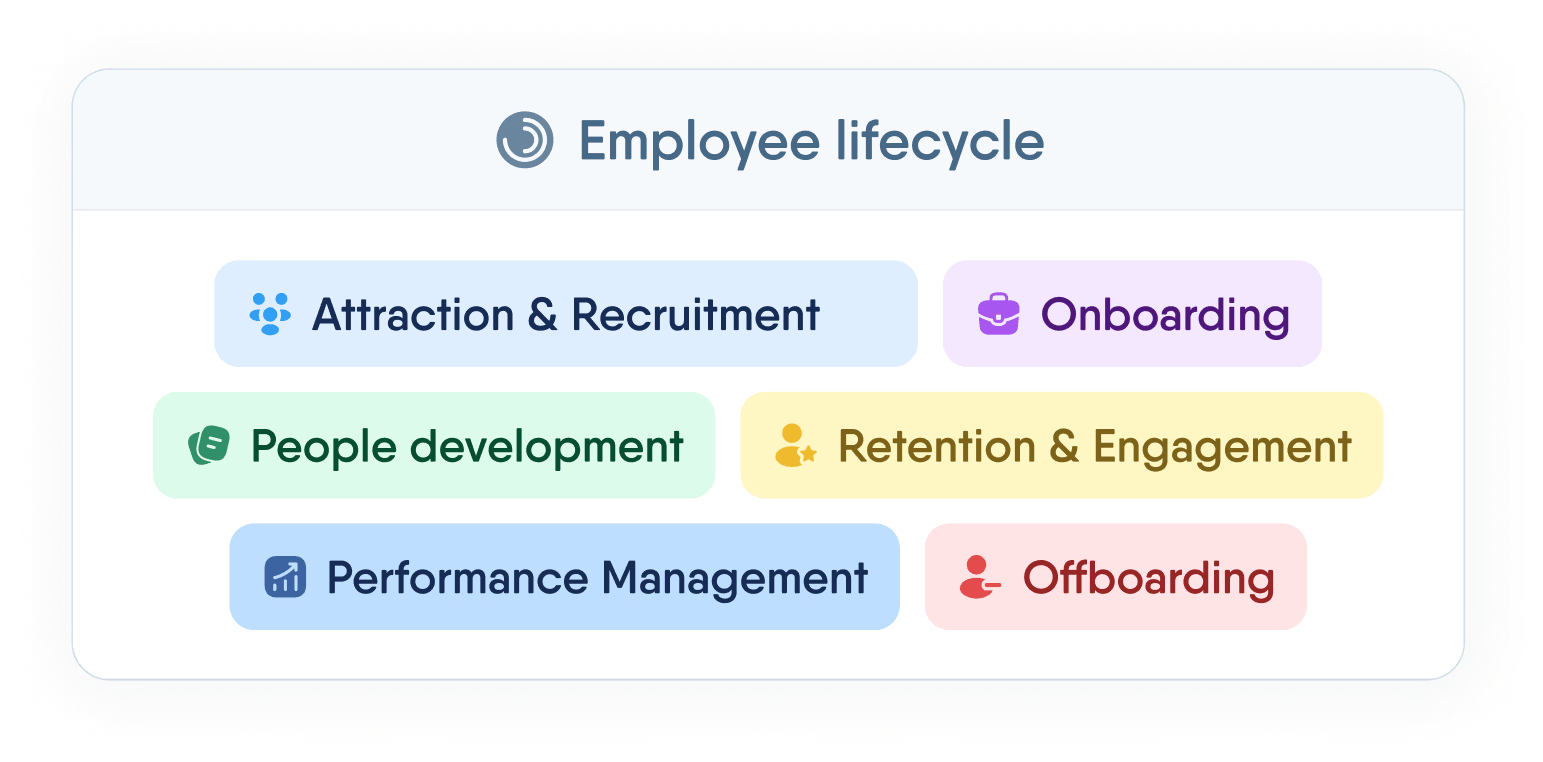
Manage the full employee lifecycle — from first interview to final offboarding — without switching tabs or losing data.
Recent articles
 2026-11-05
Gamification in HR: what it is and how to use it in training and sales
What gamification is, which game mechanics it uses, examples in HR, training and sales, and how to introduce it without putting the team off.
2026-11-03Inclusion in the workplace: what it means and how to build an inclusive culture
What workplace inclusion is, why it drives retention, engagement and innovation, and the practical steps that help build an inclusive culture.
2026-11-02AI in HR: the five jobs it does today, and how each one looks in PeopleForce
Most AI in HR today falls into five jobs. How each one works, how it looks in PeopleForce, and the five questions to ask any vendor.