
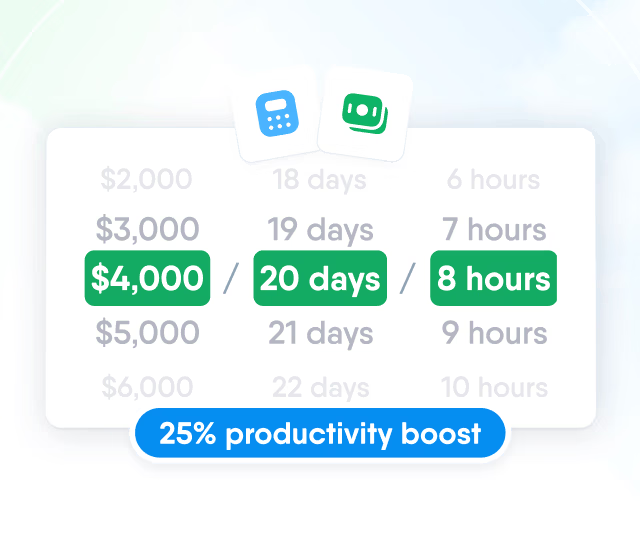
HR efficiency estimator
How does the HR efficiency estimator from PeopleForce work.
Calculate your impact



Sick pay explained: how to calculate it in Ukraine and the UK

Sick pay works very differently from country to country. In Ukraine, sick leave benefit is a percentage of average earnings: the employer pays the first five days and the Pension Fund pays from day six. In the UK, Statutory Sick Pay (SSP) is a flat weekly amount paid by the employer from the first day of absence, unless the company offers more generous contractual sick pay.
This guide covers both systems side by side: who pays, how the amount is calculated, worked examples and the mistakes HR teams make most often.
Key facts
Ukraine: average daily pay × percentage based on insurance record (50% to 100%) × calendar days of sickness. Employer pays days 1 to 5, the Pension Fund from day 6.
UK: SSP is the lower of £123.25 a week or 80% of average weekly earnings, payable from day one since 6 April 2026, for up to 28 weeks.
Calendar vs qualifying days: Ukraine pays for every calendar day of sickness; UK SSP is paid only for the employee's usual working days.
Evidence: Ukraine uses electronic sick notes in a national register; in the UK, employees self-certify for the first 7 days and need a fit note after that.
Sick pay in Ukraine
The formula is average daily pay × percentage based on insurance record × number of calendar days of incapacity. Average daily pay is calculated from the 12 calendar months before the month in which the illness began (Cabinet of Ministers Resolution No. 1266).
Example. An employee with 10 years of insurance record earned UAH 300,000 over the 365-day reference period. Average daily pay: 300,000 ÷ 365 = UAH 821.92. More than eight years of record gives 100%. Ten days of sickness come to 821.92 × 100% × 10 = UAH 8,219.20. The employer pays the first five days (UAH 4,109.60) and the Pension Fund pays the rest (UAH 4,109.60).
Who pays and for which days
Reason for absence | Who pays | For which days |
|---|---|---|
Own illness or injury | Employer, then Pension Fund | Days 1 to 5 by the employer, from day 6 by the Pension Fund |
Caring for a sick child under 14 | Pension Fund | From day one, up to 14 calendar days |
Caring for a child in hospital | Pension Fund | From day one, for the whole hospital stay |
Caring for a sick family member | Pension Fund | From day one, up to 3 days (7 in exceptional cases) |
Pregnancy and childbirth | Pension Fund | The full maternity leave period |
Work accident or occupational disease | Pension Fund | Under a separate procedure, after investigation |
Percentage based on insurance record
Insurance record | Share of average daily pay |
|---|---|
Under 3 years | 50% |
3 to 5 years | 60% |
5 to 8 years | 70% |
Over 8 years | 100% |
Some categories receive 100% regardless of record, including war veterans and combatants, families of fallen defenders, Chernobyl victims of categories 1 to 3 and employees of Diia City residents. The insurance-record percentage does not apply to maternity benefit at all: the daily amount equals average daily pay.
What to exclude from the calculation
Days not worked for valid reasons are excluded from the reference period: previous sick leave, maternity leave, childcare leave and unpaid leave. The list in Resolution No. 1266 is exhaustive, so downtime days stay in the period. Previous sick pay and maternity benefit are also excluded from the earnings total. Removing the days but forgetting to remove the amounts is the most common calculation error.
Two caps that are often missed
Maximum cap. The daily amount cannot exceed the maximum base for the unified social contribution (20 minimum wages) divided by 30.44. Short record cap. If the employee has less than six months of insurance record in the last 12 months, the benefit cannot exceed the amount calculated from the minimum wage.
Payment follows the employer's decision on the claim. If the illness lasted five days or less, the employer pays from its own funds. If it lasted six days or more, the employer submits a claim to the Pension Fund within five working days, and the employee receives the money on the next payday after funding. Sick pay is taxed like salary: 18% personal income tax and military levy, with the employer paying 22% social contribution on top.
Statutory Sick Pay in the UK
Since 6 April 2026, under the Employment Rights Act 2025, SSP is payable from the first day of sickness absence. The three waiting days and the Lower Earnings Limit have been removed, so every employee qualifies regardless of earnings. The rate is the lower of £123.25 a week or 80% of average weekly earnings, for up to 28 weeks.
SSP is paid only for qualifying days, the days the employee normally works. The daily rate is the weekly rate divided by the number of qualifying days in the week. The employer pays SSP through payroll and cannot reclaim it from the government. Many employers offer contractual (company) sick pay above SSP, often full pay for a set number of weeks, and this has to be set out in the contract or sickness policy.
Employees can self-certify for the first seven calendar days of sickness. From day eight, the employer can ask for a fit note from a GP, hospital doctor or other authorised healthcare professional. Holiday continues to accrue during sick leave, and statutory holiday that cannot be taken because of illness can be carried over.
When SSP ends after 28 weeks, or if the employee does not qualify, the employer must give them form SSP1 so they can apply for Employment and Support Allowance or Universal Credit.
Ukraine vs UK at a glance
Rule | Ukraine | United Kingdom |
|---|---|---|
How it is calculated | Average daily pay × 50% to 100% by insurance record | Lower of £123.25 a week or 80% of average weekly earnings |
Who pays | Employer for days 1 to 5, then the Pension Fund | Employer for the whole period |
From which day | From day one | From day one (since April 2026) |
Which days count | All calendar days | Qualifying (normal working) days only |
Maximum duration | Until the sick note is closed, subject to medical rules | 28 weeks |
Evidence | Electronic sick note in the national register | Self-certification for 7 days, then a fit note |
Tax | Taxed as salary | Taxed and subject to National Insurance as earnings |
Worked examples
Example 1. Ukraine, full insurance record
A manager was off sick for 8 calendar days. Insurance record: 12 years. Earnings for the 12-month reference period: UAH 420,000 over 365 days, with no excluded days.
- Average daily pay: 420,000 ÷ 365 = UAH 1,150.68.
- Percentage: 100%. Daily amount: UAH 1,150.68.
- Days 1 to 5 (employer): 1,150.68 × 5 = UAH 5,753.40.
- Days 6 to 8 (Pension Fund): 1,150.68 × 3 = UAH 3,452.04.
- Total: UAH 9,205.44.
Example 2. Ukraine, shorter record and excluded days
A specialist was off sick for 10 days. Insurance record: 5 years and 7 months, so 70%. Earnings for the period: UAH 240,000. Of the 365 days, 14 were a previous sick leave and are excluded.
- Days for calculation: 365 − 14 = 351.
- Average daily pay: 240,000 ÷ 351 = UAH 683.76.
- Daily amount: 683.76 × 70% = UAH 478.63.
- Days 1 to 5 (employer): UAH 2,393.15. Days 6 to 10 (Pension Fund): UAH 2,393.15.
- Total: UAH 4,786.30.
Example 3. UK, SSP for a full-time employee
An employee earning £600 a week works Monday to Friday and is off sick from Monday to Wednesday of the following week, 8 working days in total. The company pays SSP only.
- 80% of average weekly earnings: £480, which is higher than £123.25, so the flat rate applies.
- Daily rate: £123.25 ÷ 5 qualifying days = £24.65.
- SSP for 8 qualifying days: £24.65 × 8 = £197.20.
For a part-time employee earning £100 a week over 2 working days, SSP is 80% of £100 = £80 a week, or £40 per qualifying day.
Special situations
Illness during annual leave
In Ukraine, if the employee falls ill during annual leave, the leave is extended or moved, and sick pay is paid as normal. Sick leave to care for a child during annual leave is not paid and does not extend the leave. In the UK, an employee who falls sick during holiday can usually ask to treat those days as sick leave and take the holiday later, subject to the company's policy and notification rules.
Weekends and public holidays
In Ukraine, weekends and holidays within the sick note are paid like working days. In the UK, SSP is paid only for qualifying days, so non-working days are not paid unless contractual sick pay says otherwise.
Sickness during probation or notice
In Ukraine, sick days are paid as normal and extend the probation period. In both countries, the notice period keeps running if the employee resigns and then falls ill.
Six common sick pay mistakes
Ukraine: counting working days instead of calendar days and losing weekends inside the sick note.
Ukraine: removing excluded days from the denominator but forgetting to remove previous sick pay from the earnings.
Ukraine: applying the insurance-record percentage to maternity benefit, where it does not apply.
UK: still applying three waiting days after April 2026.
UK: paying the flat rate to low earners when 80% of their average weekly earnings is lower.
Both: not recording sick days in time, so leave balances and payroll drift apart.
Checklist before processing sick pay
Absence reported and recorded on the first day.
Ukraine: electronic sick note available for payment; insurance record confirmed.
Ukraine: reference period, excluded days and both caps checked.
UK: qualifying days and average weekly earnings confirmed; fit note requested after day 7.
Contractual sick pay rules applied where they exceed the statutory minimum.
Sick days recorded in the timesheet and leave balance updated.
What an HR system can take over
The calculation itself stays with payroll: no HR platform replaces it. But most sick pay errors happen earlier, when absence days live in emails and chats and reach the timesheet late and by hand.
In PeopleForce, sick leave is a separate absence type with its own policy. For each type you set whether it counts in calendar or working days, whether it is paid, and which approval route the request follows. That matters directly for both systems: Ukrainian sick leave can be set up in calendar days so weekends are not lost, while UK sick leave can follow working days to match qualifying days.
When an employee submits a request, the system shows the day-by-day breakdown and the projected balance before it is sent, so employee and manager see the same picture. Leave tracking keeps these days as structured data, and the team calendar shows who is off and until when. More on the concept in our glossary entry on sick leave pay.
Frequently asked questions
How much is Statutory Sick Pay?
Since 6 April 2026, the lower of £123.25 a week or 80% of the employee's average weekly earnings, paid from the first day of sickness for up to 28 weeks.
Who pays sick leave in Ukraine?
The employer pays the first five calendar days of the employee's own illness. From day six, the Pension Fund pays. For caring for a sick family member, the Pension Fund pays all days.
Are weekends paid during sick leave?
In Ukraine, yes: sick pay is calculated for calendar days. In the UK, SSP is paid only for qualifying days, the days the employee normally works.
When does an employee need a fit note in the UK?
After seven calendar days of sickness. For the first seven days, employees can self-certify.
How is the insurance record checked in Ukraine?
With an OK-5 or OK-7 statement from the register of insured persons, which the employee can order in their account on the Pension Fund portal.
Can an employee be dismissed while on sick leave?
In Ukraine, not at the employer's initiative, except when the company is fully liquidated. In the UK, sickness does not prevent a fair dismissal, but it must follow a fair process and avoid disability discrimination.
The PeopleForce editorial team creates and refines content on people management, recruiting, team development and HR technology. Every article goes through an editorial review for accuracy, relevance and clarity. We rely on verified sources, industry research, hands-on experience and PeopleForce’s own analytics, including anonymized data, to give HR professionals, managers and business owners useful, reliable information.


One login. Every HR tool you'll need.
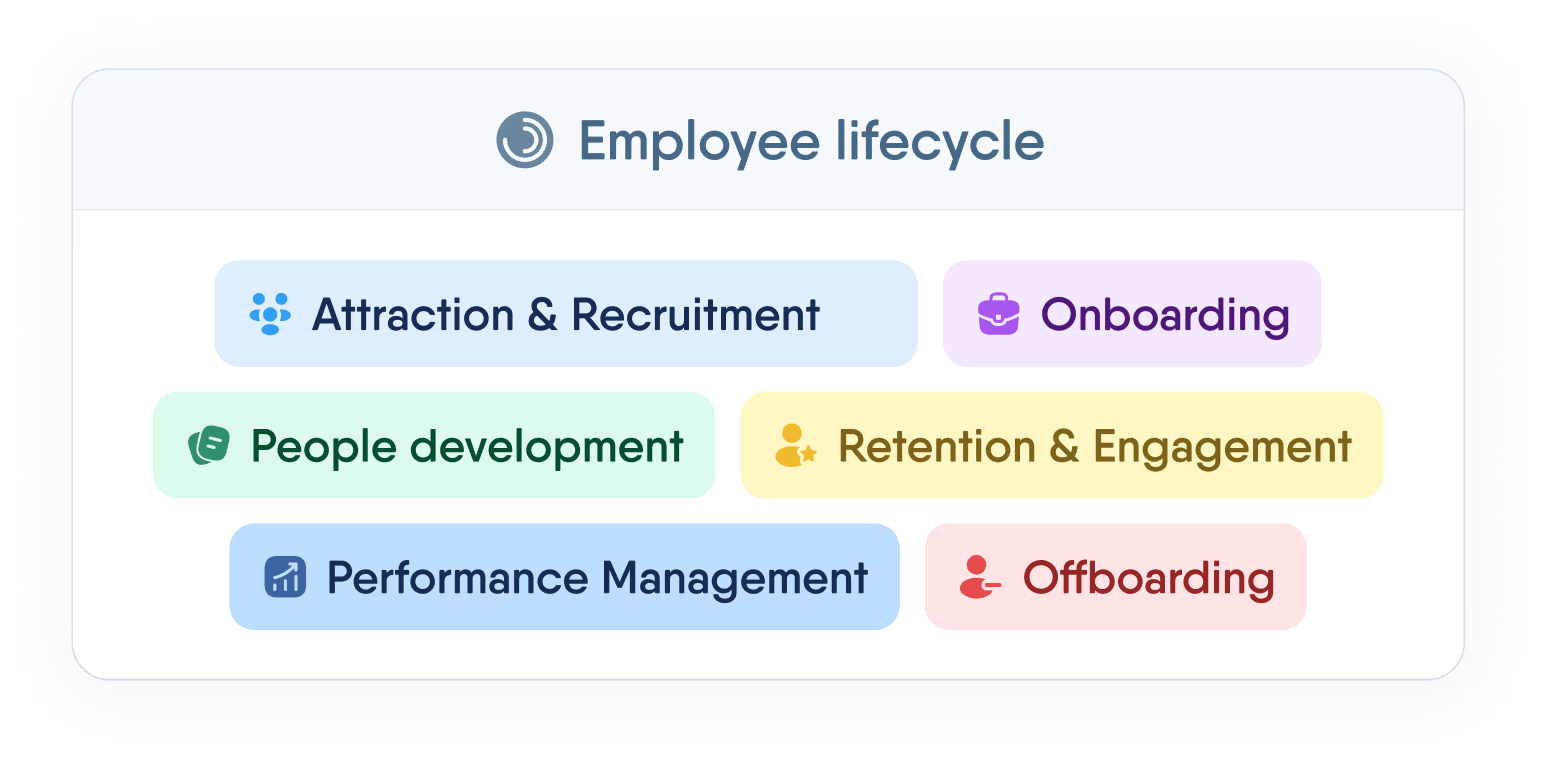
Manage the full employee lifecycle — from first interview to final offboarding — without switching tabs or losing data.
Recent articles
Overtime automation: rules in Ukraine and the UK and payroll-ready hours
What the law says about overtime in Ukraine and the UK, and how to automate tracking: hour types, rates, approvals and payroll-ready data.
Stress at work: how to manage it and when it turns into burnout
What causes stress at work, how to recognize it, practical ways to manage it, how it differs from burnout and what HR and managers can do.
Hiring manager vs recruiter: roles, differences and how they work together
How hiring managers and recruiters differ, what each one does, who makes the final hiring decision and how the two roles work together.