
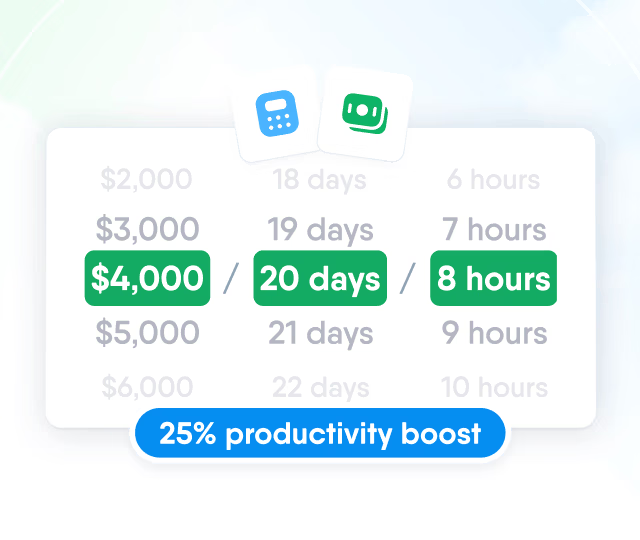
HR efficiency estimator
How does the HR efficiency estimator from PeopleForce work.
Calculate your impact



Unpaid leave
Unpaid leave is approved time away from work during which the employee keeps their job but receives no salary. It covers everything from a few extra days off to months-long personal or family leave.
Unpaid leave, also called leave without pay or an unpaid leave of absence, is a period during which an employee is excused from work with the employer's approval but does not receive a salary. The employment contract stays in force, the position is held open, and the employee returns to the same or an equivalent role when the leave ends. Unpaid leave differs from paid time off, where salary continues, and from a sabbatical, which is a specific long-term form of leave that may be paid, partly paid or unpaid.
Types of unpaid leave
Unpaid leave falls into two broad groups. Statutory unpaid leave is guaranteed by law: the employer cannot refuse it if the employee meets the conditions. Examples include unpaid parental leave beyond the paid portion, family and medical leave in the US under the FMLA (up to 12 weeks a year for eligible employees), unpaid leave to care for a sick relative, jury duty in many jurisdictions and some forms of military leave. Discretionary unpaid leave is granted at the employer's judgement: extending a holiday once the paid allowance is used up, moving house, studying for exams, a personal project or a family situation that does not fit any statutory category. Many companies also use unpaid leave as a bridge when an employee has exhausted paid sick leave but is not yet fit to return.
What the law says in different countries
In Ukraine, article 84 of the Labour Code and article 25 of the Law on Leave allow unpaid leave by agreement of the parties for up to 15 calendar days a year for family reasons, plus longer statutory unpaid leave for specific groups such as parents of young children, students and pensioners; under martial law the 15-day cap was lifted for leave by mutual agreement. In Poland, article 174 of the Labour Code lets an employee request unpaid leave (urlop bezpłatny) of any length; the employer may refuse, and the period is not counted towards seniority-based rights. In Argentina, unpaid leave is not regulated as a general right in the Labour Contract Law and depends on the collective agreement or an individual arrangement, except for specific cases such as the unpaid "excedencia" period after maternity leave. In the US, there is no general right to unpaid leave; the FMLA covers only defined family and medical situations. Because the rules diverge so much, HR teams in multi-country companies should document the local labor law position for each entity rather than apply one global rule.
How unpaid leave affects pay, benefits and accruals
Salary for the pay period is prorated by the number of working days actually worked, so unpaid days must reach payroll before the run closes. Beyond salary, the policy needs to answer several questions that employees will ask: whether holiday accrual continues during leave (in many countries it stops or is reduced for long absences), whether health insurance and other employee benefits stay active and who pays the premiums, whether the period counts towards seniority, bonus eligibility and the probationary period, and how social security contributions are handled, since gaps can affect future pension or sickness benefits. In some jurisdictions the employee may voluntarily pay contributions to avoid a gap.
Building an unpaid leave policy
A good policy in the employee handbook sets out who is eligible (often after probation), the maximum duration and how often leave can be taken, how far in advance to apply, who approves, what happens to benefits and accruals, and the return-to-work procedure. It should distinguish clearly between statutory leave that cannot be refused and discretionary leave that is decided case by case, and it should state the criteria managers use so decisions are consistent and defensible. Requiring employees to use up paid leave first is common but should be stated explicitly. Finally, keep every request and decision in writing: unpaid leave is one of the areas where informal verbal agreements cause disputes later.
Managing unpaid leave in PeopleForce
In PeopleForce leave tracking, unpaid leave is set up as a separate leave type with its own rules: whether it is paid, whether balance limits apply, who approves it and whether a document is required. Employees submit requests from the self-service portal or mobile app, managers approve them in a click, and the absence appears in the team calendar so nobody plans a launch around someone who is away. Because PeopleForce Time reports paid and unpaid leave hours separately in timesheets and exports, payroll gets the exact number of unpaid days to prorate the salary without a manual reconciliation. The approved request is stored in the employee's record, giving you the written trail an audit or dispute would require.


Let us show you what's possible
From Core HR to advanced workforce analytics — see the platform saving 80 hours a month for teams just like yours. Fully tailored to your workflow.